PKL Venues 2026: Host Cities, Stadiums and Travel Guide
Kabaddi does not sit still. Unlike most leagues that plant their teams in one city for the whole season, PKL packs up and moves every couple of weeks, dragging all 12 teams across the country like a traveling circus with better footwork and a much stricter breathing rule.
PKL Season 13’s official host PKL Venues have not been announced yet, but based on Season 12’s pattern, expect a rotation through four major cities, each hosting roughly two weeks of matches before the tournament moves on. Season 12 used Visakhapatnam, Jaipur, Chennai, and Delhi, and those same cities are strong candidates to return, given how well each one performed in terms of crowd turnout and atmosphere.

This guide covers how PKL’s caravan format actually works, breaks down the venues used in recent seasons, and gives practical advice for anyone planning to catch a match in person once Season 13’s official venues are confirmed. Whether you are a longtime fan or planning your first live match, this should answer most of what you need to know before booking anything.
Why Certain Regions Have Stronger Kabaddi Culture
Not every host city treats kabaddi the same way, and understanding regional differences helps explain why some venues consistently deliver louder, more passionate crowds than others.
North Indian states like Haryana, Punjab, and Rajasthan have strong, long-standing grassroots kabaddi traditions going back generations, long before PKL existed in its current television-friendly format. This built-in cultural connection tends to translate into knowledgeable, vocal crowds who understand the sport’s finer details, not just casual spectators there for the spectacle.
Southern cities like Chennai have built their kabaddi following more recently, largely through Tamil Thalaivas’ presence in the league, but the growth has been genuine. Regional pride in a home franchise creates strong crowd support even in areas without kabaddi’s older grassroots history.
Coastal cities like Visakhapatnam occupy an interesting middle ground, with a passionate but smaller fan base compared to the traditional kabaddi belt, which is part of why the city’s return after a seven-year gap in Season 12 felt like a genuine event rather than a routine scheduling choice.
Stadium Capacity and Atmosphere Compared
PKL venues are intentionally smaller and more intimate than typical cricket or football stadiums, and this size difference actually works in the sport’s favor when it comes to atmosphere.
| Venue | City | Approximate Capacity |
|---|---|---|
| Rajiv Gandhi Indoor Stadium | Visakhapatnam | Around 5,000 |
| Sawai Mansingh Indoor Stadium | Jaipur | Around 2,000 |
| SDAT Multipurpose Indoor Stadium | Chennai | Around 4,000 |
| Thyagaraj Indoor Stadium | Delhi | Around 5,000 |
A smaller venue means every seat feels closer to the action than in a sprawling cricket stadium, and crowd noise carries much further in an enclosed indoor arena than it would outdoors. This is part of why PKL broadcasts often feel more electric than their attendance numbers alone might suggest.
How PKL’s Caravan Format Works
Instead of every team playing home and away matches at their own stadium the way football or basketball leagues usually work, PKL uses what is often called a caravan format. All 12 teams travel together to one host city, play a cluster of matches there over roughly two weeks, then move as a group to the next city.
This approach exists mainly to spread the sport’s visibility across the country rather than concentrating matches in one or two metro areas. A fan in Chennai gets a real chance to see every PKL team play live, not just whichever franchise happens to be based nearby.
Why Cities Get Chosen as Hosts
Host city selection depends on a mix of factors: stadium availability and capacity, past attendance and crowd energy, regional kabaddi popularity, and logistical ease for moving 12 teams and a full broadcast crew in and out within a tight window.
Cities that deliver strong ticket sales and passionate crowds tend to get invited back in future seasons. Visakhapatnam’s return in Season 12, after a seven-year absence since Season 6 in 2018, is a good example of a city earning its way back onto the host list through genuine fan demand rather than simple geographic convenience.
Making a Trip Out of It: Combining a Match With Local Sightseeing
Since PKL venues sit in some of India’s most visited cities, a match trip can easily double as a short travel getaway if you plan around the leg schedule rather than rushing in and out for a single evening. A little extra planning turns a routine match visit into a genuinely worthwhile trip.
Visakhapatnam pairs well with a beach visit, since the city sits right on the coast with several popular beaches within easy reach of the stadium. Jaipur offers some of Rajasthan’s most famous palaces and forts, making a kabaddi trip a natural add-on to a broader Pink City visit. Chennai brings centuries-old temples and a rich cultural scene alongside its modern sports venues, while Delhi offers some of the country’s most recognizable historical monuments within a short drive of the Thyagaraj Indoor Stadium.
Combining a match with even a day or two of local sightseeing turns a simple kabaddi outing into a genuinely memorable trip, especially for fans traveling from outside the host city or from abroad specifically to catch live PKL action.
Booking Tickets Without Getting Overcharged
Ticket prices for PKL matches are generally reasonable compared to major cricket or football fixtures, but demand for high-profile matchups, like a home team’s opening night or a marquee rivalry, can push resale prices well above face value if you are not careful.
Official ticketing partners typically open sales a few weeks before each leg begins, and buying early almost always beats waiting until the week of the match, both for price and seat selection. Avoid unofficial resale listings on social media entirely, since these carry a real risk of counterfeit tickets that simply will not scan at the gate.
If a specific match sells out through official channels, patience is usually the better strategy over paying inflated resale prices, since PKL’s multi-match legs mean there is almost always another fixture in the same city within the same one or two-week window.
PKL Season 12 Host Cities: The Most Recent Template
Since Season 13’s venues are not confirmed yet, Season 12’s four-city rotation is the best available template for what to expect. Here is exactly how it played out.
| Leg | City | Venue | Dates |
|---|---|---|---|
| Leg 1 | Visakhapatnam | Rajiv Gandhi Indoor Stadium | August 29 – September 11, 2025 |
| Leg 2 | Jaipur | Sawai Mansingh Indoor Stadium | September 12 – 28, 2025 |
| Leg 3 | Chennai | SDAT Multipurpose Indoor Stadium | September 29 – October 12, 2025 |
| Leg 4 & Playoffs | Delhi | Thyagaraj Indoor Stadium | October 13 – 31, 2025 |
Each leg ran for roughly two weeks, and the final host city, Delhi, doubled as the playoff venue once the league stage wrapped up. This pattern, ending the season at whichever city hosts the final leg, has held across multiple recent seasons.
Visakhapatnam: Rajiv Gandhi Indoor Stadium
Vizag’s return to the PKL host list in Season 12 marked a genuine homecoming. The city hosted matches during Season 1 and Season 3, then went quiet on the PKL circuit until Season 6 in 2018, and did not host again until Season 12, a seven-year gap.
The Rajiv Gandhi Indoor Stadium gave the coastal Andhra Pradesh city a strong platform to reintroduce itself to the league, opening Season 12 with a marquee clash between Telugu Titans and Tamil Thalaivas, followed by Bengaluru Bulls facing Puneri Paltan on the same opening night.
Jaipur: Sawai Mansingh Indoor Stadium
Jaipur holds a special place in PKL history beyond just being a regular host city. The Sawai Mansingh Indoor Stadium was where the league played its historic 1000th match, during Season 10 in 2023-24, cementing the Pink City’s status as one of PKL’s most significant venues.
As the home ground of Jaipur Pink Panthers, the city’s matches during Season 12 carried extra atmosphere whenever the home team took the mat, with two-time champions Jaipur Pink Panthers squaring off against Bengaluru Bulls among the notable fixtures during this leg.
Chennai: SDAT Multipurpose Indoor Stadium
Chennai serves as the home ground for Tamil Thalaivas, and the SDAT Multipurpose Indoor Stadium has become a reliable stop on the PKL caravan in recent seasons. Season 12’s Chennai leg featured high-profile matchups including UP Yoddhas against Gujarat Giants and Dabang Delhi K.C. facing Haryana Steelers.
That particular Dabang Delhi versus Haryana Steelers fixture carried an extra storyline too, with Naveen Kumar facing his former team, the kind of subplot that gives even a regular league-stage match some added weight for fans following individual player histories.
Delhi: Thyagaraj Indoor Stadium
Delhi typically closes out the PKL season, and the Thyagaraj Indoor Stadium has hosted both the final league-stage leg and the playoffs in recent editions. This dual role makes Delhi arguably the most important single venue on the entire calendar, since it hosts the tournament’s biggest matches when stakes are highest.
Season 12’s Grand Final, where Dabang Delhi K.C. beat Puneri Paltan 31-28 on October 31, 2025, took place at this exact venue, giving the home team a genuine crowd advantage during their title-winning run.
Notice how spread out the championships actually are once you look past who hosted them. The final leg’s host city, Delhi in Season 12, gets the honor of staging the biggest matches of the year, which makes it arguably the single most important venue slot on the entire calendar.
Other Venues PKL Has Used in Past Seasons
Beyond the current four-city rotation, PKL has used a wider range of venues across its full history. Knowing this history helps make sense of why certain cities occasionally reappear after a long absence, the way Visakhapatnam did in Season 12.
| City | Known For |
|---|---|
| Hyderabad | Hosted Season 10’s final, where Puneri Paltan beat Haryana Steelers 28-25 at the Gachibowli Indoor Stadium |
| Pune | Hosted Season 11’s semifinals and final at the Balewadi Sports Complex, where Haryana Steelers won their first title |
| Mumbai | Hosted Season 9’s final at the Dome, NSCI SVP Stadium, where Jaipur Pink Panthers beat Puneri Paltan |
| Bengaluru | Home ground of Bengaluru Bulls, a frequent host city across multiple seasons |
This wider rotation shows how much the league likes to spread matches around rather than settling permanently on the same handful of cities every single year.
Attending a PKL Match: What to Know Before You Go
If you are planning to catch a match in person once Season 13’s venues are confirmed, a little preparation goes a long way toward making the experience smoother.
Buy Tickets Through Official Channels
Always book through official PKL ticketing partners or the venue’s own authorized channels. Third-party resellers occasionally charge inflated prices or, worse, sell tickets that turn out to be invalid at the gate.
Arrive Early
Most PKL venues hold anywhere from 2,000 to 5,000 spectators, smaller than a typical cricket stadium, which means good seats fill up fast. Arriving at least 60 to 90 minutes before the first match gives you time to find parking, pass through security, and settle into your seat before the action starts.
Plan Around the Leg, Not Just One Match
Since each host city holds matches over roughly two weeks, check the full leg schedule rather than assuming only one date works. This gives you flexibility if travel plans shift, and it might let you catch two or three matches during a single trip instead of just one.
Book Accommodation Early
Hotels near major venues, especially during opening weekends or when a popular home team is playing, can fill up quickly. Booking accommodation at least two weeks ahead of your planned visit helps you avoid scrambling for a room close to matchday.
How Venue Choice Affects Team Performance
Playing in front of a home crowd genuinely seems to matter in PKL, though it does not guarantee results. Puneri Paltan hosted the Season 11 playoffs in their own home city of Pune and still lost the final to Haryana Steelers, proving that a home venue helps atmosphere far more than it guarantees a trophy.
That said, teams do generally perform better during their own city’s leg of the season, likely due to a combination of crowd support, reduced travel fatigue, and simple comfort with local conditions. A player who sleeps in their own bed and eats familiar food during a home leg has one less thing to worry about compared to a team constantly living out of hotel rooms across four different cities in a row.
What to Expect for PKL Season 13 Venues
Official Season 13 host cities have not been announced, and they likely will not be confirmed until closer to the season’s expected mid-December 2026 start date, once the auction wraps up and squads are finalized.
Based on recent patterns, expect a similar four-city rotation, likely drawing from a pool that includes Visakhapatnam, Jaipur, Chennai, Delhi, Pune, Hyderabad, and Mumbai, all cities with strong recent hosting history. Our PKL Season 13 start date guide tracks official announcements as they come in, including venue confirmations once Mashal Sports releases them.
Until that announcement lands, treat any specific venue claim for Season 13 as an educated guess rather than confirmed fact, no matter how confidently a headline states it. The same caution that applies to unconfirmed match dates applies just as much to unconfirmed host cities.
Frequently Asked Questions
Which cities will host PKL Season 13?
Official host cities for Season 13 have not been announced yet. Based on Season 12’s rotation, expect a similar mix of cities like Visakhapatnam, Jaipur, Chennai, and Delhi, though this will only be confirmed closer to the season’s start.
How long does each PKL host city stay on the schedule?
Each host city typically holds matches for roughly two weeks before the tournament moves to the next city, based on the pattern seen across recent seasons including Season 12.
Which city usually hosts the PKL playoffs and final?
The final leg’s host city typically doubles as the playoff venue. In Season 12, this was Delhi’s Thyagaraj Indoor Stadium, while Season 11’s playoffs and final were held in Pune.
How many people can PKL stadiums typically hold?
Most PKL venues hold between 2,000 and 5,000 spectators, considerably smaller than major cricket stadiums, which is part of why tickets for popular matches can sell out quickly.
Does playing at home give a team an advantage?
It can help with crowd support and reduced travel fatigue, but it does not guarantee a win. Puneri Paltan lost the Season 11 final on home soil in Pune, showing that home advantage helps atmosphere more than it guarantees results.
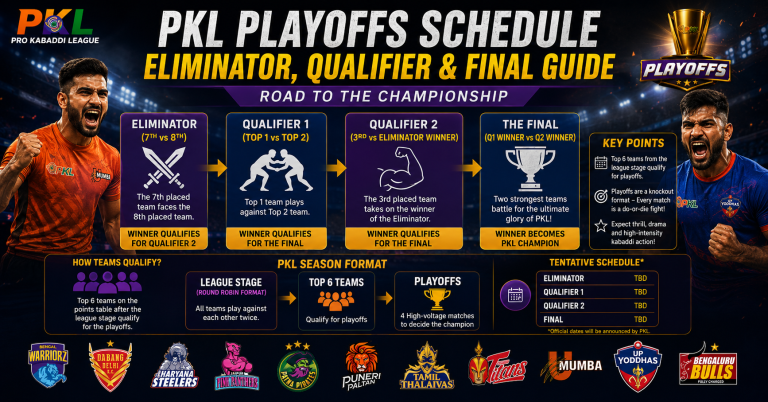
Related Guides
For the full expected timeline before Season 13’s venues get confirmed, check our PKL Season 13 start date guide. If you want to see how venue and playoff format connect, our PKL playoffs schedule guide breaks down the knockout stages step by step. And for a closer look at the Chennai-based franchise that calls the SDAT Stadium home, visit our Tamil Thalaivas team page.